
SYN Flood Attack: How It Works, and What It Cannot Test
A SYN flood attack fills the TCP backlog with half-open connections from forged addresses. Here is how the handshake trick works, why SYN cookies and edge proxying genuinely…
Read more →INSIGHTS
Practical guidance on DDoS resilience testing, regulatory expectations under FINMA, DORA and NIS2, and what realistic attack simulation reveals about your defenses.
A SYN flood attack fills the TCP backlog with half-open connections from forged addresses. Here is how the handshake trick works, why SYN cookies and edge proxying genuinely…
Read more →DORA has applied since 17 January 2025, and its testing pillar cannot be satisfied on paper. Who is in scope, what Articles 24 to 27 require, TLPT every…
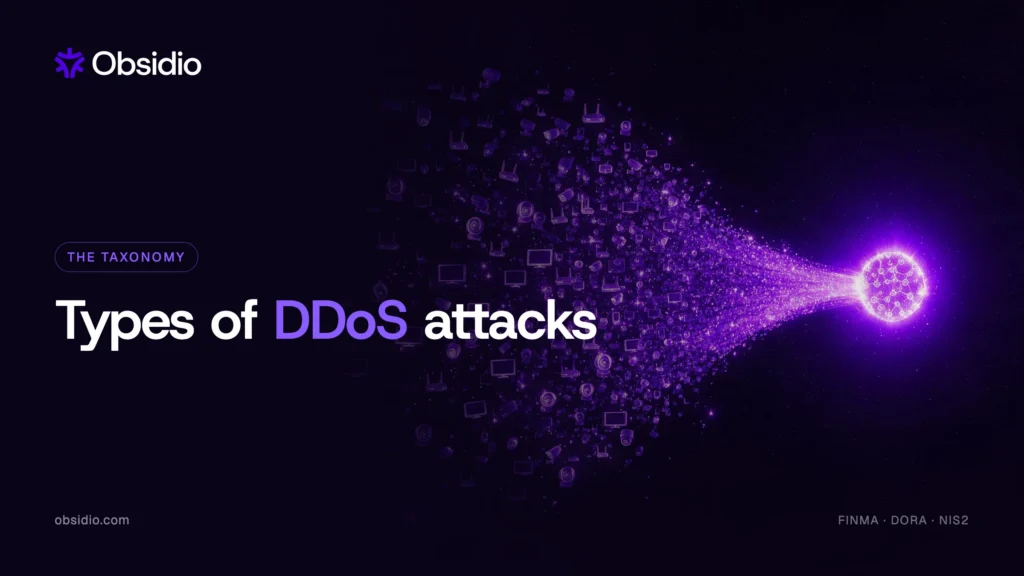
Read more →Two events can both be called DDoS and have nothing in common. Volumetric, protocol, application-layer and slow attacks each exhaust a different resource, and each is stopped by…
Read more →A DDoS stress test sends real attack traffic against infrastructure you own, with your authorization, to find out whether your defenses hold. What's legal, what isn't, how it…
Read more →A botnet is a network of hijacked devices under a single operator's control, and the engine behind nearly every large DDoS attack. How botnets are built, from Mirai…
Read more →Puppeteer Script is the one entry here that is not an attack. It runs a journey you write yourself, in a real browser, across many workers at once.…
Read more →A TCP connection flood opens raw sockets and holds them open, saying nothing at all. What it exhausts is finite and easy to overlook: the connection table, file…
Read more →A TLS flood lets your server complete the entire handshake, including the expensive key-exchange work, then abandons the connection without sending a request. The client does almost nothing.…
Read more →RUDY sends a complete, entirely valid POST, declares honestly how large the body will be, then delivers that body one byte at a time. The server has no…
Read more →Apache Killer exploits CVE-2011-3192. One small request asks for many overlapping byte ranges, and a vulnerable server materialises the response body once per range until memory runs out.…
Read more →